St. Jude Family of Websites
Explore our cutting edge research, world-class patient care, career opportunities and more.
St. Jude Children's Research Hospital Home
- Fundraising
St. Jude Family of Websites
Explore our cutting edge research, world-class patient care, career opportunities and more.
St. Jude Children's Research Hospital Home
- Fundraising
Human iPSC Core
A collaborative service to characterize and differentiate iPSC lines for researchers engaged in pluripotent stem cell and hematopoiesis research
About the Human iPSC Core

The Hematology Human Induced Pluripotent Stem Cell (iPSC) Core provides comprehensive, collaborative expertise in human pluripotent stem cell biology, genome engineering, disease modeling and hematopoietic differentiation. The Core partners with investigators to generate, characterize, genetically modify, maintain and differentiate human iPSC lines in support of basic, translational and disease-focused research.
The Core has extensive expertise in directing iPSCs toward hematopoietic lineages. Differentiation capabilities include the generation of megakaryocytes, erythroid cells, myeloid cells, B cells, NK cells, and hematopoietic stem and progenitor cells (HSPCs), including transplantable HSPC differentiation. The Core also supports the generation of iPSC-derived bone marrow organoids and other advanced cellular models designed to better recapitulate the hematopoietic and bone marrow microenvironment.
In addition to differentiation services, the Core provides iPSC reprogramming, including nonintegrating LNP-mRNA reprogramming, genome editing, clonal expansion, quality control, characterization, banking and iPSC line distribution.
The Core also provides hands-on training and consultation for investigators who wish to establish or expand iPSC-based approaches in their own laboratories. For studies of inherited predisposition syndromes and other disorders with phenotypes extending beyond the hematopoietic system, the Core offers expertise in differentiating iPSCs into additional lineages, including neural and cardiac cell types.


iPSC Core Services

The Hematology iPSC Core provides customized, collaborative support for iPSC generation, characterization, genome engineering, and differentiation. Services include:
- iPSC reprogramming, including nonintegrating LNP-mRNA–based reprogramming
- iPSC culture, expansion, banking and distribution
- iPSC characterization and quality control
- Genome editing and clonal isolation
- Hematopoietic differentiation. Examples include:
- HSPCs, including primitive and transplantable HSPC differentiation
- Megakaryocytes
- Erythroid cells
- Myeloid cells
- B cells
- NK cells
- Bone marrow organoid differentiation and advanced hematopoietic models
- Neural and cardiac differentiation for selected projects involving non-hematopoietic phenotypes
- Protocol development, consultation and hands-on training for investigators working with human iPSCs
-
Slide activated
-
Slide activated
-
Slide activated
-
Slide activated
-
Slide activated
-
Slide activated




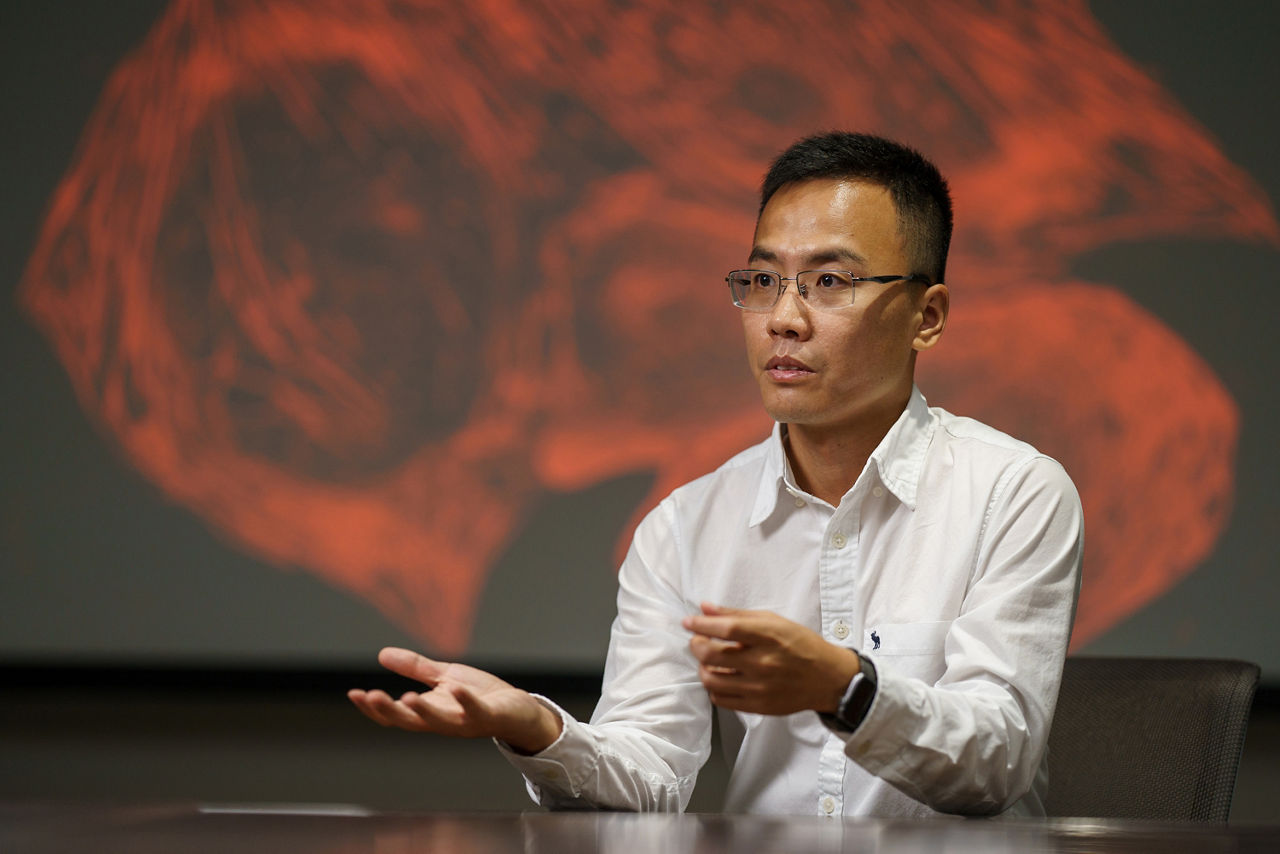
About the Director – Dr. Lei Han
Lei Han, PhD, has been engaged in pluripotent stem cell research since 2009. His broad experience in hematopoietic, cardiac, neural and endothelial differentiation from pluripotent stem cells — including both embryonic stem cells and induced pluripotent stem cells — brings a wealth of knowledge that advances research efforts at St. Jude. Han oversees the Hematology Human iPSC Core, which focuses on hematopoietic disease modeling and hematopoietic differentiation. He earned his PhD in Stem Cell Biology from Shandong University in China and completed his postdoctoral training at the University of Pittsburgh and Indiana University, where he conducted pluripotent stem cell and cardiovascular research. Leveraging his multi-field expertise, Han seeks to enhance the understanding of how developmental pathways contribute to hematopoietic development and disease.
The team
-
View details
Jayaram Sakthi
Senior Researcher
Jayaram Sakthi
Senior Researcher
Affiliations


Contact us
Lei Han, PhD
Lead Scientist
Hematology Human iPSC Core
262 Danny Thomas Pl
Room D3024
Memphis TN 38105-3678
USA