St. Jude Family of Websites
Explore our cutting edge research, world-class patient care, career opportunities and more.
St. Jude Children's Research Hospital Home
- Fundraising
St. Jude Family of Websites
Explore our cutting edge research, world-class patient care, career opportunities and more.
St. Jude Children's Research Hospital Home
- Fundraising
Pharmacists close gaps in global cancer care
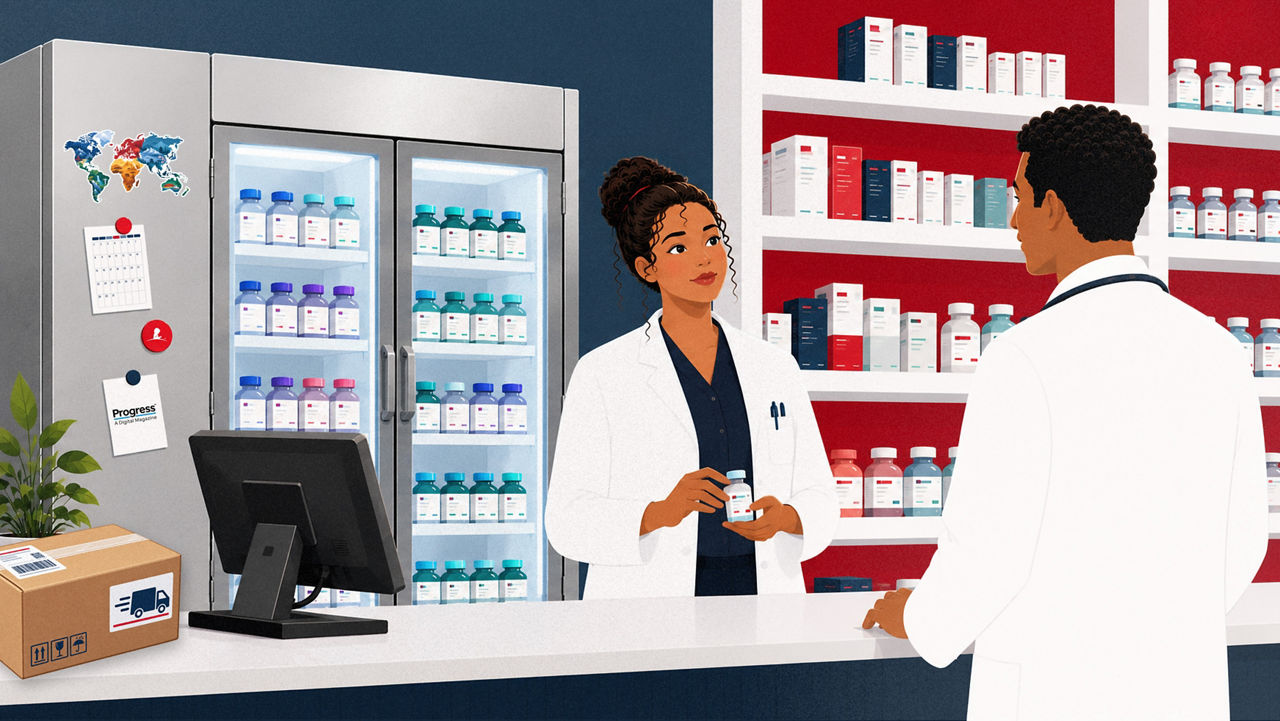
By building expertise, securing supply chains, and facilitating education, the Global Transversal Pharmacy Program is making an impact worldwide.
Never underestimate the power of a simple checklist. At hospitals in Central America, chemotherapy interventions needing a pharmacist rose initially and then dropped sharply as fewer medication issues occurred after regional pharmacists adopted a standardized chemotherapy verification checklist. That checklist was developed by the St. Jude Global Pharmacy Transversal Program and co-designed with two pharmacist champions in Guatemala and El Salvador. It helped pharmacists catch prescribing, dosing and medication errors.
The initial rise in interventions was expected: The checklist helped pharmacists develop a sharper eye for medication errors. But why the drop? Interventions fell because oncologists became more aware of the expertise available behind the pharmacy counter. Instead of waiting to hear about an error, they brought pharmacists into conversations sooner, preventing those errors from occurring in the first place.
“What we’ve seen in Central America is an evolution and advancement in their practices, where they are incorporating pharmacists into a multidisciplinary care team in cases where they weren't being considered before,” said Hannah Sauer, PharmD, clinical pharmacy specialist for the Department of Global Pediatric Medicine. “Now oncology teams are thinking of the pharmacist first when they have questions about medications.”

Medication in the on-site pharmacy at St. Jude.
The checklist launched in February 2026 as part of ChECk First, the Program’s quality improvement initiative. That initiative is one of several designed to strengthen pharmacy practices worldwide through education, community building and research.
As medicine experts who interact directly with patients and caregivers, pharmacists play an essential role in pediatric oncology. While their contribution has historically been underrecognized, that’s changing as pharmacists become more prominently integrated into care teams.
“Pharmacists touch every part of patient care, but we’re often behind the scenes,” said Jennifer Pauley, PharmD, Global Pharmacy director. “People don’t realize we order, prescribe, dispense and follow up on medication. We perform pharmacokinetics and pharmacogenomics. We’re there to make sure everything goes smoothly for our patients.”
Meeting pharmacies where they are
Nearly 400,000 children develop cancer each year, and close to 90% of them live in countries with limited resources. These are the areas with the greatest need, yet they face a shortage of both healthcare job opportunities and applicants — pharmacy professionals included.
According to a report from the International Pharmaceutical Federation, countries with significant resources average one health worker for every 64 people. Resource-limited countries face ratios as steep as one for every 621 people.

Through special initiatives and global collaborations, the program aims to fill the gaps for under-resourced and understaffed pharmacies as well as bolster capacity overall. A healthcare organization without a dedicated pharmacy team might need extensive support, while an established pharmacy department may request specialized training or connections.
“There is a diverse range of challenges, even within the same country,” said Camille Smith, PharmD, clinical pharmacy specialist for the Department of Global Pediatric Medicine. “Our role is to understand each pharmacist’s needs and connect them with the right support, whether that’s educational opportunities, technical resources, mentorship or a network of colleagues facing similar challenges.”
Building pharmacy expertise
The program’s educational initiatives reach broad and deep. "We work with pharmacists from a wide range of backgrounds, practice settings and experience levels," said Pauley. "As we develop our educational curriculum, we’re focused on creating learning opportunities that support pharmacists across that spectrum, from foundational concepts to more advanced areas of clinical pharmacy practice."
Currently, pharmacists enrolled in the curriculum can access basic and intermediate online training modules through Cure4Kids, an online resource for healthcare professionals. An advanced module is forthcoming. Looking ahead, Pauley and team envision a full curriculum combined with hands-on, in-person training at St. Jude.
In addition to coursework, the program hosts webinars featuring pharmacy professionals from St. Jude and around the world. They’re also developing a pharmacy guidance document to be included in the Adapted Resource and Implementation Application (ARIA) Guide.
“Our goal is to help pharmacists build on their existing knowledge and expand their impact within their organizations,” said Smith. “When pharmacists have access to training, resources and professional support, they’re better able to apply those skills in practice and contribute more fully to the healthcare team.”
Global Platform for Access to Childhood Cancer Medicines
The program is also heavily involved with the Global Platform for Access to Childhood Cancer Medicines (the Global Platform), a partnership between St. Jude and World Health Organization (WHO), in collaboration with UNICEF and the Pan American Health Organization (PAHO). The platform aims to provide an uninterrupted supply of cancer medicines to participating countries.
The Global Pharmacy team was integral in the Global Platform’s design as well as in selecting medications to be part of the initiative. The team continues to support a broad range of activities, including forecasting and quantification, supply chain operations, clinical and technical guidance, capacity strengthening, and country implementation support to help improve access to essential childhood cancer medicines.
“The platform’s goal is not to just deliver medicines,” said Sauer. “It's to ensure hospitals and health systems are prepared to safely store, manage and use them. We are actively involved in conducting facility assessments, and when gaps are identified, we work with countries to build their capacity to support high-quality care.”
To date, the Global Platform is working with 12 participating countries, and several have reported demonstrated benefits from more detailed policies, clinical guidance, training and awareness efforts supported by the platform partners.
Moving forward with pharmacy at the forefront
It took years of preparation for the program to reach its current level of activity, and now the projects keep coming. The program recently launched the first pilot cohort for its PrOFILE (Pediatric Oncology Facility Integrated Local Evaluation) pharmacy sibling tool for pharmacies, which helps participating sites assess their pharmacy services, identify strengths and prioritize opportunities for improvement. The team is also taking a more active role in clinical trials led through the Department of Global Pediatric Medicine.
Whether improving medication safety, strengthening pharmacy systems or supporting clinical research, the program helps ensure pharmacists are prepared for their roles on childhood cancer care teams.
“We’ve spent years building these opportunities, and now many of them are moving into action,” said Pauley. “It’s an exciting time for our program.”
About the author


