St. Jude Family of Websites
Explore our cutting edge research, world-class patient care, career opportunities and more.
St. Jude Children's Research Hospital Home

- Fundraising
St. Jude Family of Websites
Explore our cutting edge research, world-class patient care, career opportunities and more.
St. Jude Children's Research Hospital Home
- Fundraising
Reaching New Milestones in SMA Treatment


Spinal muscular atrophy (SMA), a progressive neuromuscular disease affecting 1 in 15,000 babies in the United States, was known for being devastating and uniformly fatal. In 2016, the first effective treatments rewrote the narrative.


SMA is caused by loss or mutation of both copies of the gene SMN1. Untreated, this loss leads to reduced levels and activity of the survival motor neuron 1 (SMN1) protein, subsequent irreversible motor neuron loss, progressive motor function loss, and, in more severe Type 1 cases, death by 2 years of age. Although it manifests across a range of characteristics, when SMA occurs in infants, it is especially debilitating, requiring treatment to prevent further deterioration.
At St. Jude, the Pediatric Translational Neuroscience Initiative is tackling the question of how to optimize treatment for diseases such as SMA by leveraging expertise in experimental therapeutics, decades of knowledge about clinical trial design and implementation, and a collaborative spirit to work with a variety of stakeholders. These three arms of the program are led by the Center for Pediatric Neurological Disease Research, the Center for Experimental Neurotherapeutics, and the Office of Strategy and Alliance, respectively.
Richard Finkel, MD, Center for Experimental Neurotherapeutics director and Department of Genomic & Translational Neuroscience member, is a world-renowned expert in the treatment of SMA. Finkel joined St. Jude in 2020, expanding the institution’s clinical care for pediatric neurologic diseases. The recently published results of clinical trials led by Finkel demonstrate a commitment to continuous innovation — not simply accepting the progress made in 2016 with the first SMA therapies but pushing to make those therapies better and improve outcomes for children and families.

Providing SMA treatment before symptoms begin
SMA causes the loss of motor neurons responsible for activating muscles. Without those neurons, muscle tissue atrophies. The oral drug risdiplam improves motor function and increases survival by preventing atrophy from accumulating over time. However, risdiplam had only been Food and Drug Administration (FDA)–approved for patients aged 2 months and older.
An international consortium, co-led by Finkel, tested whether treating younger children with SMA with risdiplam, before symptoms appeared, could delay or prevent disease progression. The results of the phase 2 clinical trial were published in the New England Journal of Medicine.
Babies with the genetic mutations that cause SMA were all started on daily risdiplam in the first six weeks of life, before definitive features of SMA appeared; the researchers then followed their progress for two years. Of the eight children genetically predisposed to SMA Type 1, seven were able to sit up at 12 months of age, and five could walk by the end of the study’s reporting period, with no fatalities reported. Of the 18 children who had a mutation predicting less severe disease, all achieved sitting by 12 months and walking by 24 months, with most reaching these milestones in timeframes comparable to those of typically developing children. None of the children experienced any major treatment-related adverse events.
“We demonstrated in this study that with treatment shortly after birth, risdiplam maintained a good safety profile and generated a favorable clinical response,” said Finkel, who was co-first and corresponding author on the study. “Importantly, data from this study supported the request for the FDA to change the label for risdiplam’s use, extending it to younger children.”
While risdiplam slows and may even halt disease progression, there is still no cure for SMA. However, the success of this approach in newborns suggests that early intervention provides substantial benefits.
“The treatment of babies right after birth is an important milestone,” said Finkel, “but we will continue to investigate potentially better ways to give these kids a chance at a normal life.” To that end, Finkel has already begun testing risdiplam in the prenatal environment, which showed promising results in a single patient case report, also published in the New England Journal of Medicine.

The treatment of babies right after birth is an important milestone, but we will continue to investigate potentially better ways to give these kids a chance at a normal life.
Department of Genomic & Translational Neuroscience


N-of-1: A case study of prenatal risdiplam
The SMN1 protein is most needed in the third trimester of fetal development and the first three months of life after birth. Because SMN1 deficiency affects motor neuron survival, SMA symptom severity is closely linked with early implementation of effective interventions. Finkel launched a unique clinical study to assess the impact of prenatal treatment of risdiplam in a single patient to determine the feasibility of treating a fetus in utero for SMA Type 1 — a first-of-its-kind protocol.
In this case, both parents carried a pathogenic SMA genetic variant and previously had an infant born with SMA Type 1 who died at 16 months of age. At that time, treatment did not exist. While expecting their next child, genetic testing conducted through amniocentesis confirmed the fetus had no copies of SMN1, which, in combination with the family history and other genetic information, was highly predictive of this infant being born with SMA Type 1.
Risdiplam was administered to the expectant mother during the final six weeks of pregnancy. Since birth, the child has been periodically observed at St. Jude, and, thus far, has no observable signs of SMA. While some developmental delays and abnormalities were observed, these were believed to have resulted from deficits in early development, before risdiplam was given.

As this child continues to grow, she has made steady, albeit slower than normal, progress in her motor development. She has met major developmental milestones, including eating and sitting up independently, breathing without additional support, using words and gestures to convey her wants, and reaching the age of 3 years — a significant feat for children with SMA Type 1.
“Our primary objectives were feasibility, safety, and tolerability, so we’re very pleased to see that the parent and child are doing well. The results suggest it would be worthwhile to continue investigating the use of prenatal interventions for SMA,” said corresponding author Finkel.
The study’s promising results, including the child’s development and milestone achievements, support running a more comprehensive prenatal study. To date, 11 other patients have been treated prenatally using the same model established by Finkel and his colleagues at St. Jude.


Expanding therapeutic options to older patients
While risdiplam is effective at slowing disease progression, chronic administration of the drug presents challenges, including potential noncompliance. Onasemnogene abeparvovec (OAV101) offers a potential solution to this problem as a one-time gene replacement therapy that provides sustained survival motor neuron protein expression. However, OAV101, as a single intravenous administration, was limited to children under the age of 2 years old in the United States or those weighing less than 21 kilograms in European countries.
Through a pharmaceutical company–sponsored clinical trial in which Finkel had a leading role, researchers aimed to expand access to the drug to older children with milder, but still life-threatening, forms of SMA. The study examined the safety and efficacy of intrathecal administration (injection into spinal fluid) to children and teens between the ages of 2 and 18 years old with SMA Type 2, who could sit, but not walk, independently. While SMA Type 2 is less severe than Type 1, with life expectancy stretching into adulthood, longevity is still reduced if untreated, emphasizing the need for a one-time safe and effective gene therapy option within this group.
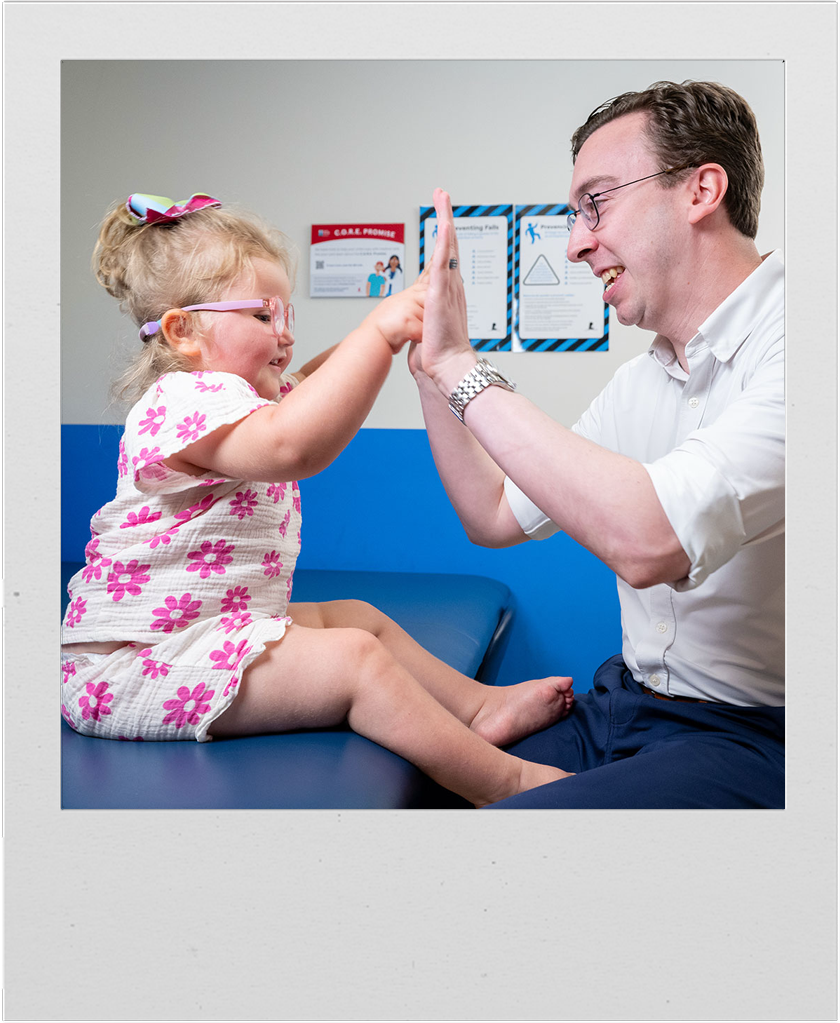
Finkel co-designed the branch of the OAV101 study focused on children who had never received treatment before and published the findings in Nature Medicine. Patients treated with OAV101 demonstrated a statistically significant improvement in motor function, as measured by the Hammersmith Functional Motor Scale-Expanded score, a tool used to evaluate the physical abilities of people with SMA, compared to the control group.
“The results of this study were persuasive to the FDA to approve this intrathecal administration of the gene therapy for all patients over 2 years of age,” said Finkel, who was the corresponding author. “This approval provides potential access to this gene therapy throughout a person’s lifespan.”
A continuum of innovation to advance SMA therapeutics
The development of the first viable SMA treatments offered a glimmer of hope for patients and their families. A decade later, innovation and expansion of therapeutic options are giving researchers and clinicians the chance to halt disease progression and are opening a world of possibilities for children of varying ages and disease severity.
Ongoing improvements to therapy reflect the efforts of researchers, such as Finkel, to continue moving the needle in treatment efficacy and expand the patient population who can be treated with available therapies. Even after a decade of consistent improvement, the work will not be done until SMA no longer poses a barrier to health, mobility, or quality of life.