
What does St. Jude do with donations?
Donations to St. Jude are used to fund research and cover the cost of lifesaving treatment and world-class patient care. Your donation will be used to support day-to-day operations at St. Jude, and help ensure a future for St. Jude so that we can continue to grow and treat as many children as possible.
No matter what amount you're able to give, every donation makes a difference!
Why donate to St. Jude Children's Research Hospital?

St. Jude patient Kase, with family
Many families come to St. Jude thinking it’s like any other hospital, but families never receive a bill from St. Jude for treatment, travel, housing or food — so they can focus on helping their child live.
St. Jude sees more than 9,000 people a year for treatment and research of childhood cancer and other catastrophic diseases.
St. Jude has helped push the overall childhood cancer survival rate in the U.S. from 20% in 1962 to more than 80% today. We won’t stop until no child dies from cancer.
St. Jude has achieved a 94% survival rate for acute lymphoblastic leukemia (ALL), a type of blood cancer, up from 4% in 1962.

St. Jude patient Nico

St. Jude patient Carstyn, with his mom
St. Jude shares the breakthroughs it makes to help doctors and researchers at local hospitals and cancer centers around the world treat childhood cancer.
We treat children from all 50 states and from around the world.
Donation breakdown and charity ratings
Unlike other hospitals, the majority of funding for St. Jude comes from generous donors.
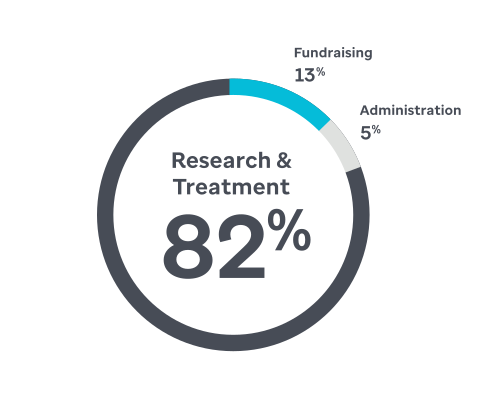
Eighty-two cents of every dollar received from generous donations, research grants, insurance recoveries, licensing and investment returns goes to support the current and future needs of St. Jude.

According to Charity Navigator, St. Jude Children's Research Hospital has a four-out-of-four star rating for our Overall Score and Rating.
Where do St. Jude donations go?
See what your donation could mean for a St. Jude patient and their family.
-
Your $14 gift could help provide one platelet count test for a St. Jude patient.*
-
Your $25 gift could help provide one rehabilitation ball for St. Jude patients. Rehabilitation balls help patients regain strength and mobility after cancer treatment.*
-
Your $100 gift could help provide five chemotherapy IV tubing sets sized especially to help children receive treatment.*
-
Your $1,000 gift could help provide seven sets of schools supplies so patients can continue their education while receiving treatment away from home.*
-
Your $5,000 gift could help cover the cost of the daily room rate of the ICU, which has twice been recognized with the Beacon Award for Critical Care Excellence given by the American Association of Critical-Care Nurses.*
-
Your $10,000 gift could help provide one CT scan for a St. Jude patient to provide parents with much-needed answers about their child’s health.*


*Items listed here are representative of services and supplies that are part of the treatment and care of children at St. Jude. The cost of each item or service is an approximation and will vary based on actual costs incurred and individual patient needs. Your donation will be used for the general operating needs of St. Jude, where no family ever receives a bill for treatment, travel, housing, or food.
Make a positive impact on the children of St. Jude
Because the majority of St. Jude funding comes from generous donors, we have the freedom to focus on what matters most — saving kids regardless of their financial situation. And your donation helps St. Jude give our doctors and researchers the tools and technology they need to make the next groundbreaking discovery.

St. Jude patient Valentina, with family
More to discover
-

Cost for families
It costs a lot for St. Jude to cure a child with cancer. But because of people like you, families never receive a bill from St. Jude for treatment, travel, housing or food.
-

Why support St. Jude?
Learn how supporting St. Jude Children's Research Hospital helps pediatric cancer patients worldwide.
-

The impact of St. Jude
Since 1962, St. Jude has been advancing research and improving care and survival rates for kids with cancer and other life-threatening diseases.


